BalticReed
A project focusing on reed harvest and nutrient circulation
Project films
The objective of the BalticReed Project is to recycle nutrients from eutrophicated coastal waters of the Baltic Sea to land. At the same time, the project promotes the sustainable utilisation of reed biomass as a raw material for diverse purposes, for example replacing peat.
This video explores how reed, once seen as a nuisance, can be transformed into a valuable resource. From growing media to building material, reed offers sustainable uses that support nutrient recycling, reduce emissions, and promote local entrepreneurship.
Webinars

Conference 10 Dec 2024 (held in Swedish). Focusing on the potential for reed as fodder for cows and horses. More information >
Webinar 27 Nov 2024 (held in Swedish). How can municipalities work with the reed a renewable and unutilised resource?
Webinar 25 April 2024 (held in Swedish), presenting results from municipal survey on reed harvesting.
Seminar 7 Feb 2024, in Stockholm, the project discussed reed harvesting as a eutrophication measure and explore the potential och reed-based value chains.
Reports
-
The project’s key findings and results presented as infographics
Infographics (English)
-
This policy recommendation presents legal solutions to enable industrialscale harvesting of reed in water areas. Well-planned harvesting can improve the biodiversity of coastal areas, help in nutrient removal, and provide sustainably produced raw material for the production economy.
Policy Recommendations for Industrial scale reed cutting (English)
Policy Recommendations for Industrial scale reed cutting (Swedish) -
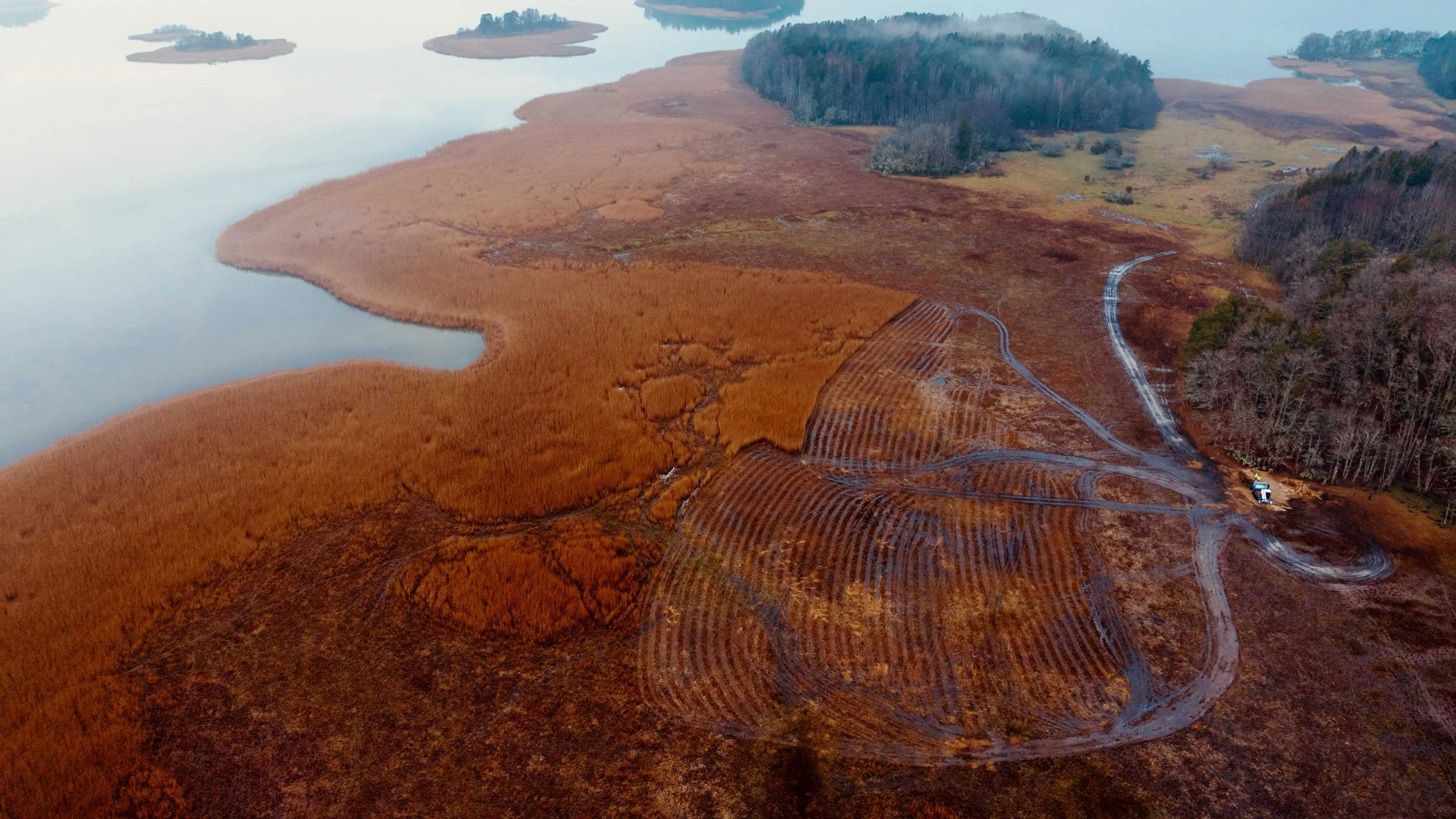
This guide provides practical instructions for planning and implementing the logistics of reed harvesting. The focus is on how harvesting, temporary storage, and transportation of reed can be organized efficiently and cost-effectively in reed bed sites that are typically characterized by limited road access, low load-bearing capacity, and seasonal variations in accessibility due to weather conditions.
Currently, reed is mainly harvested for nature conservation purposes, such as removing excess nutrients and restoring habitats. However, the growing interest in reed as a biomaterial is creating increasing demands for well-functioning logistics chains.
Logistic guidelines (Swedish) -
Before starting reed mowing or harvesting, it is essential to clearly define the main objectives for the harvest. These may include controlling reed growth, restoring or managing habitats, removing nutrients, and utilizing the reed biomass. Optimally, a single project can serve several of these purposes simultaneously. Clear objectives guide the key planning decisions: whether mowing a site is sensible, where and when it should take place, how it will be carried out, and how the harvested biomass will be used. Well-defined goals also support the best ecological outcomes.
Ecological guidelines for sustainable reed harvesting (English)
Ecological guidelines for sustainable reed harvesting (Swedish) -
This report has been developed within the EU Interreg Central Baltic project BalticReed, which aims to unlock the potential of reed as a sustainable resource for the Baltic Sea region. It presents a value-chain analysis mapping of current reedbased production in Finland, Åland, and Sweden, identifying key bottlenecks as well as opportunities for innovation and growth.
By examining existing operating conditions, market structures, and practical challenges, the report highlights concrete development needs and solutions to strengthen reed-based value chains — from harvest to product. It is designed for entrepreneurs, policymakers, researchers, and regional actors interested in advancing bio-based materials, circular economy, and coastal restoration in the Central Baltic area or elsewhere.
The value-chain findings and recommendations in this report are derived from project pilot results, stakeholder consultations, interviews, workshops, event discussions, and complementary research conducted by the project consortium. They represent the project’s collective interpretation and may not fully capture all regional variations or future developments.
Materials

Ready-to-use communication toolkit to help municipalities, startups, NGOs, and innovators tap into reed’s untapped potential. Go to toolkit >
Related news