
GYPREG Sweden – Final Results from field trials
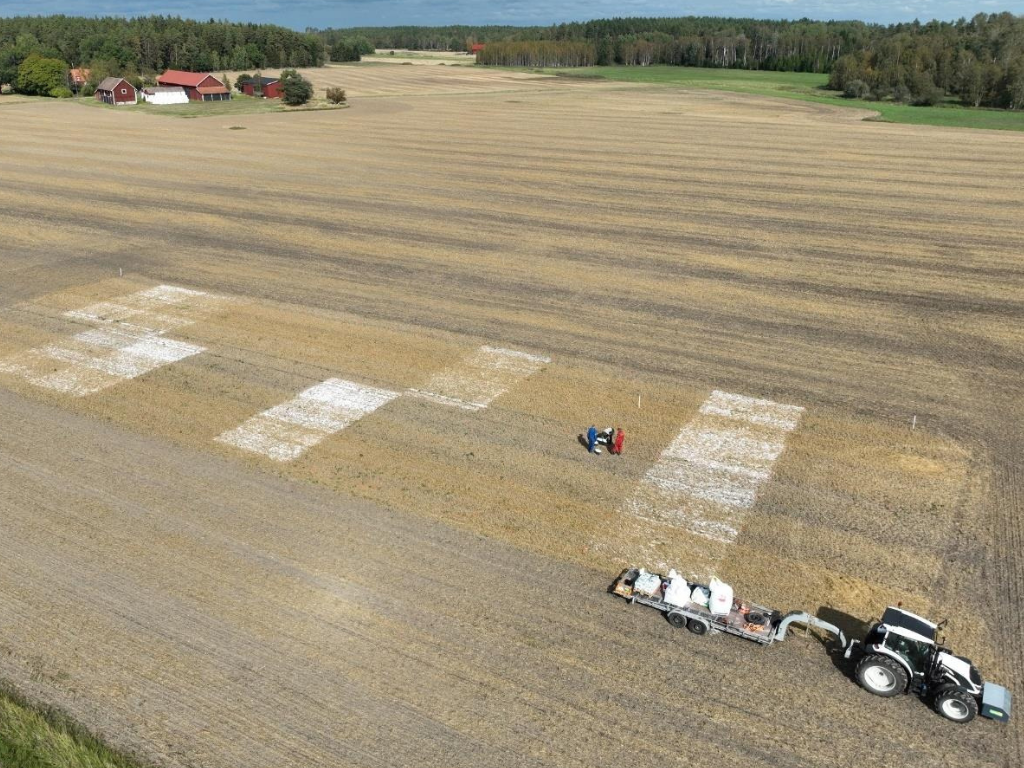
Field trials with gypsum and structure lime. ©Jens Blomquist
Comparing Gypsum and Structure Lime in Swedish Conditions
In the Swedish field trials, the effect of gypsum treatment on farmland has been evaluated. Gypsum is widely used in Finland to reduce phosphorus runoff from agriculture, while rather unknown in other Baltic countries. In Sweden, we are more familiar with structure lime, a soil amendment similar to gypsum. In the GYPREG field trials, both gypsum and structural lime are included to build an understanding of the similarities and differences between the two. Effects on crop, soil and runoff water have been monitored.
Early Results Show Promising Trends
We now have the results of the first year’s evaluation, one year after the spreading of gypsum and lime products. On the nutrient runoff, both gypsum and structure lime show indications of reduction. Only the very high dose of gypsum provides statistically assured phosphorus reduction, but the tendency is also clear when gypsum is used according to the Finnish recommendations. Looking at the crop and the harvest, no negative impact is seen. For some of the treatments, there is a tendency for increased yield, which is important for the farmer’s interest in gypsum treatment.
Looking Ahead: Need for Long-Term Data
To get statistically significant results of both nutrient runoff, harvest and soil, more trials are needed. The conclusion is that the potential to use gypsum as a soil amendment for improved soil structure and reduced phosphorus leakages is good, as an alternative and complement to structure lime. We hope to be able to come back to the trials, to keep on evaluating the long-term effects.
The full report from the field trials can be downloaded in Swedish here.