
Agriculture is the Baltic Sea's largest source of nutrient pollution, accounting for 53% (Race For The Baltic's analysis of HELCOM data, 2025). Reducing nutrient runoff from farmland is therefore essential to restoring the health of our sea. One promising solution is surprisingly simple: spreading gypsum, a by-product of fertiliser production, on agricultural fields to reduce phosphorus losses.
After three years of research, field trials and collaboration across the Baltic Sea region, the GYPREG project is coming to an end. This autumn, we brought researchers, authorities and other stakeholders together at three events to share results and discuss how to turn them into action.
In Warsaw on 8 October, together with the Institute of Technology and Life Sciences, we presented the Polish results and explored the country's enormous potential. With around 3 million hectares of suitable farmland and gypsum available from power plants, Poland has significant opportunities to scale up the method. However, gypsum is not yet recognised as a water protection measure in Polish policy. Discussions focused on overcoming barriers, strengthening farmer advisory support and taking the work forward.
In Stockholm on 22 October, around 20 representatives from authorities, research, agricultural advisory services and potential gypsum suppliers discussed what large-scale implementation would require. A clear message emerged: suppliers need predictable demand, farmers need practical guidance, and long-term funding is essential.
The final seminar in Helsinki on 28 October brought everything together under the question Can gypsum save the Baltic Sea? Project partners, researchers and authorities explored the scientific results, practical challenges and policies needed to scale up gypsum treatment. Race For The Baltic's Elsa Bertils presented the requirements for large-scale implementation, while Aleksandra Najda joined a panel on the future of gypsum in water protection. Discussions also covered new uses for phosphogypsum and the importance of regional cooperation.
And the potential is significant:
Treating just 30% of suitable clay fields could reduce phosphorus inputs to the Baltic Sea by approximately 350 tonnes annually.
After three years of research and collaboration, the potential is clear. Now the challenge is turning knowledge into action. With the right policies, funding and support for farmers, gypsum treatment could become an important tool for reducing phosphorus runoff across the region. The GYPREG project may be coming to an end, but the work to bring these solutions to a larger scale is just beginning.
GYPREG is co-funded by the European Union through the Interreg Baltic Sea Region Programme.
Want to explore the results further? Read the press release for more insights from GYPREG, or explore our practical guidelines for gypsum treatment and other project resources.
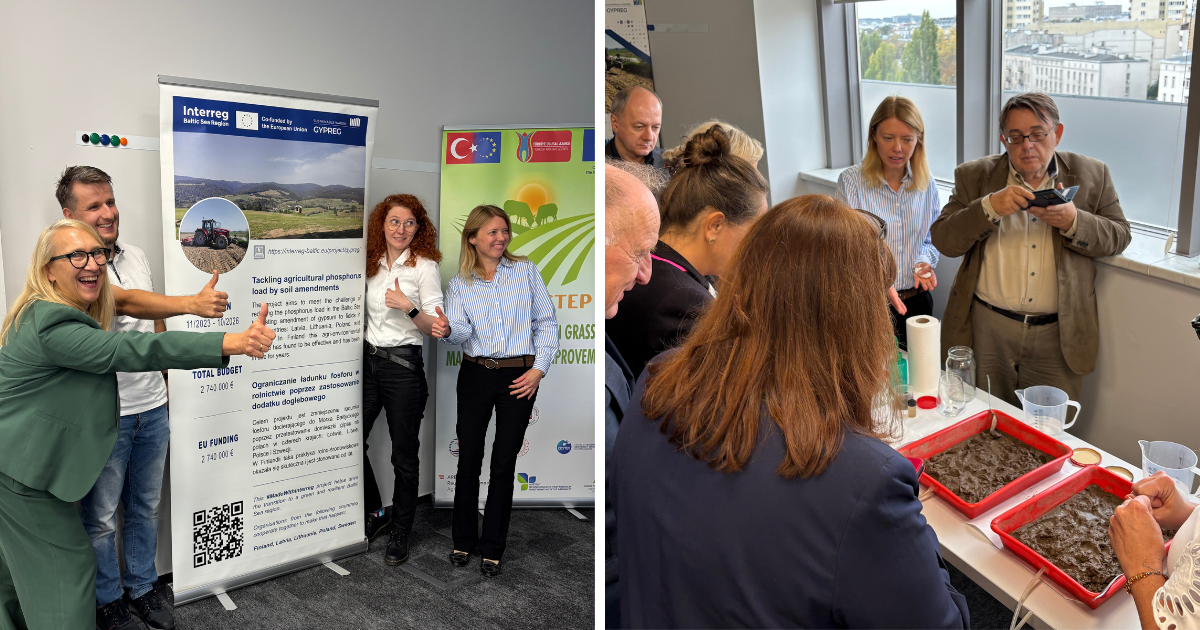
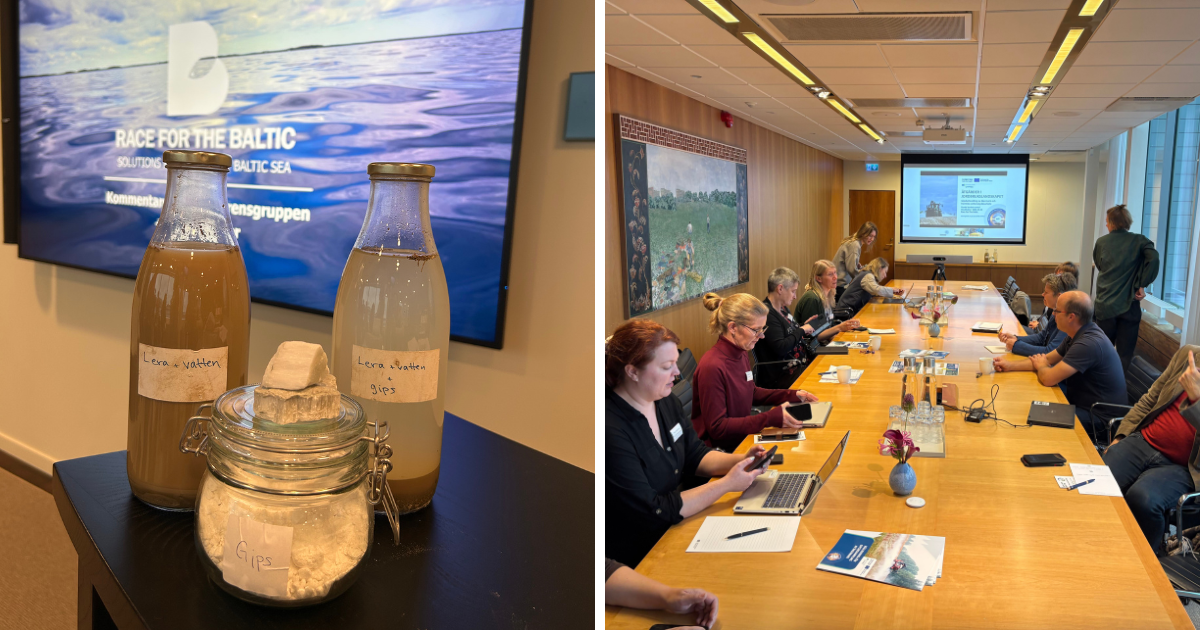
Impressions from the roundtables in Warsaw and Stockholm on scaling up gypsum treatment to reduce phosphorus runoff.