
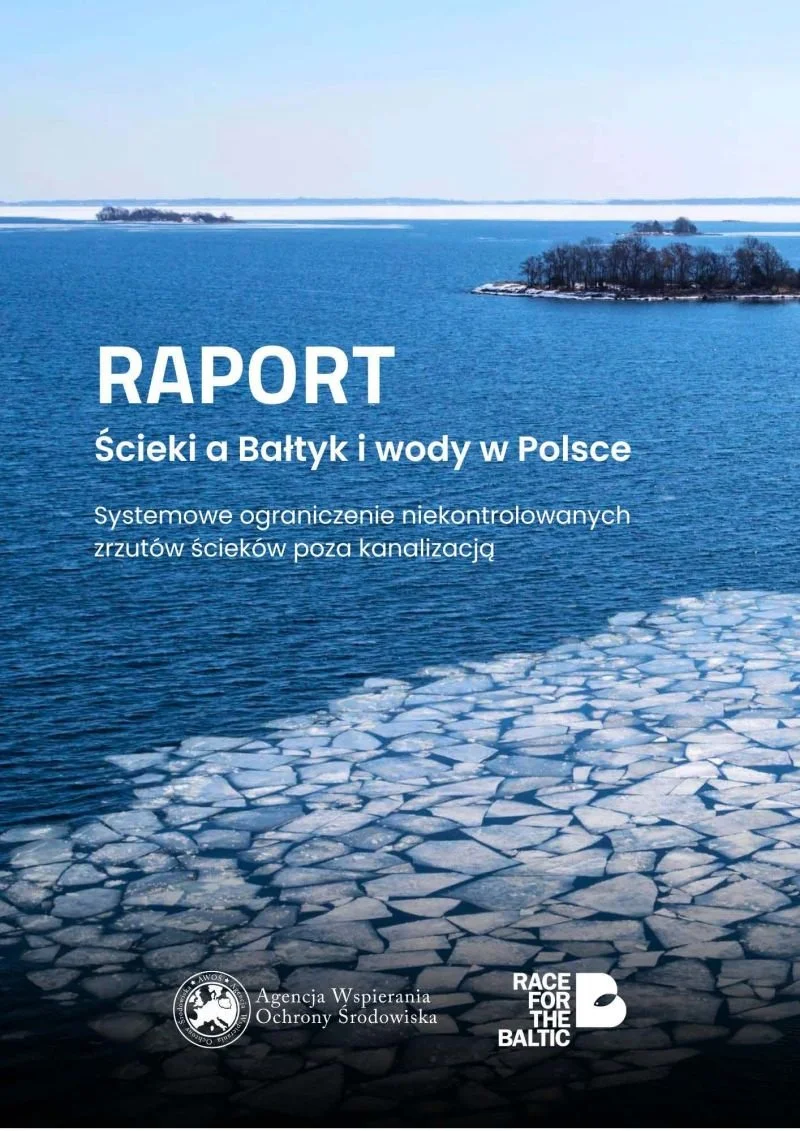
Around 10 million people in Poland are not connected to a sewage system. In the least-connected municipalities, fewer than one in four residents have access to sewerage infrastructure.
Together with Agencja Wspierania Ochrony Środowiska Sp. z o. o., Race For The Baltic has examined what happens to wastewater outside the formal sewage system, and what this means for the Baltic Sea.
Poland has the lowest sewage-connection rate in the Baltic Sea region. Every year, up to 255 million m³ of wastewater may leak into soil and water - equivalent to almost one third of the volume of Lake Śniardwy, Poland’s largest lake.
The environmental consequences are significant. Wastewater is estimated to account for around 35% of the phosphorus load reaching the Baltic Sea from Poland. Phosphorus is one of the key nutrients driving eutrophication, cyanobacteria blooms and the recurring problems with poor water quality and beach closures during the summer months.
Leaking septic tanks can also pose a direct public health risk by contaminating groundwater and private wells, particularly in rural areas.
The report points to several areas where action is needed: greater awareness of the scale of the problem, replacement of leaking septic tanks, clearer technical standards and stronger enforcement by municipalities and environmental authorities.
Addressing wastewater leakage is therefore not only a local sanitation issue. It is also an important part of reducing nutrient pollution and improving the health of the Baltic Sea.
Read the full report in Polish.