New prevention cover and publication launched to support cleaner port operations
The second quarter of 2026 brought two of the milestones we'd spent the first months of the year building towards: the new prevention cover left the design table and arrived at the Port of Elbląg, and our publication on dry bulk cargo handling and Baltic Sea eutrophication officially launched.
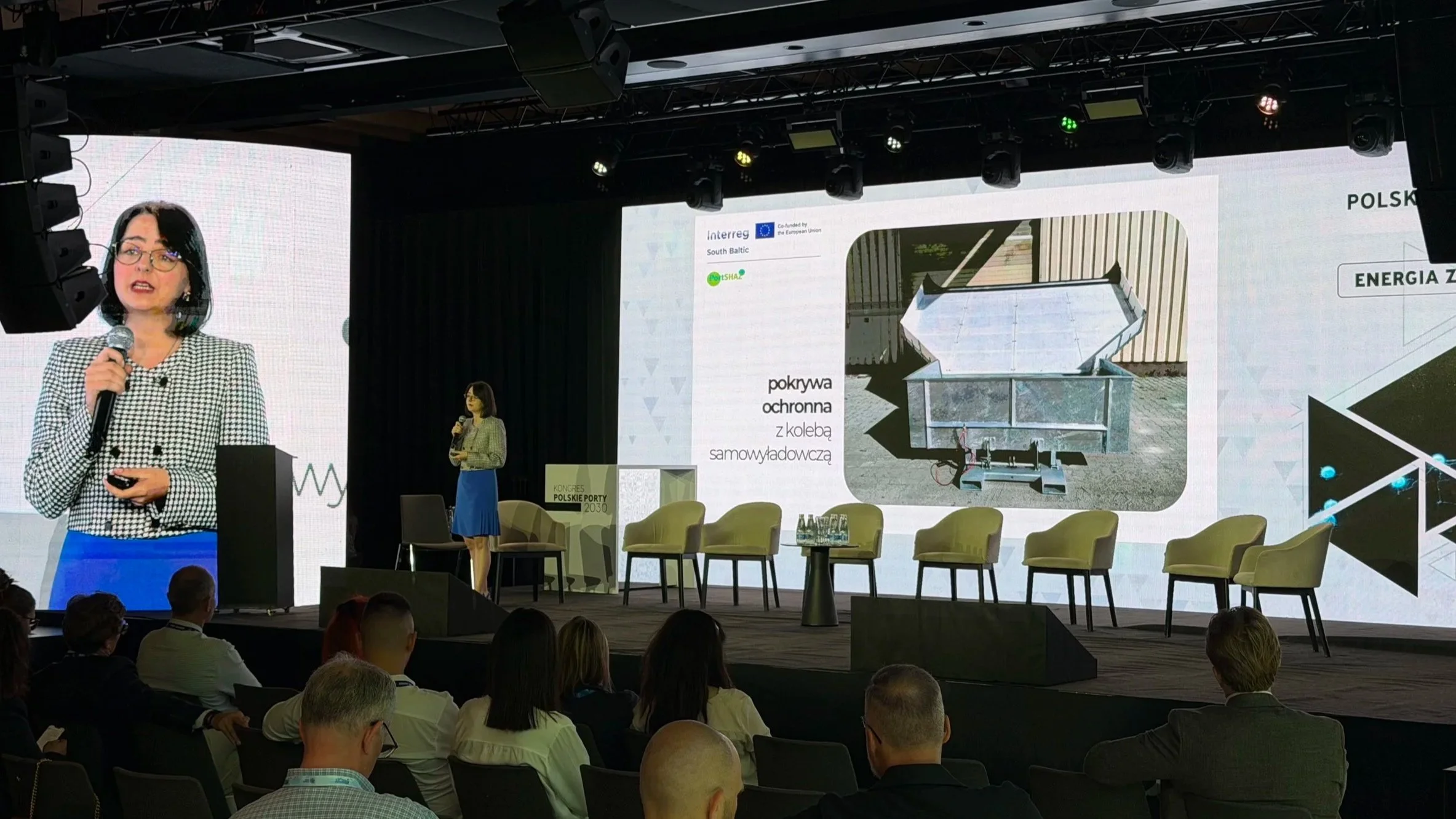
Following the process we coordinated from start to finish – gathering feedback from terminal operators who had used our earlier covers, defining the concept, selecting a manufacturer, and overseeing production – the new prevention cover arrived at the Port of Elbląg, making good on the pilot we announced last quarter. Eight years after building our first cover for dry bulk cargo handling, this version is stronger, smarter, and more efficient. Three improvements stand out: a modular polyethylene discharge surface that's abrasion-resistant and low-friction, with individual sections replaceable instead of the whole structure; a welded, galvanised steel frame that's more durable yet still light enough for one person to reposition; and an improved self-dumping container that captures, temporarily stores, and allows simple discharge of bulk material during unloading. The cover is now at the port, soon to undergo real-world testing during dry bulk cargo handling.
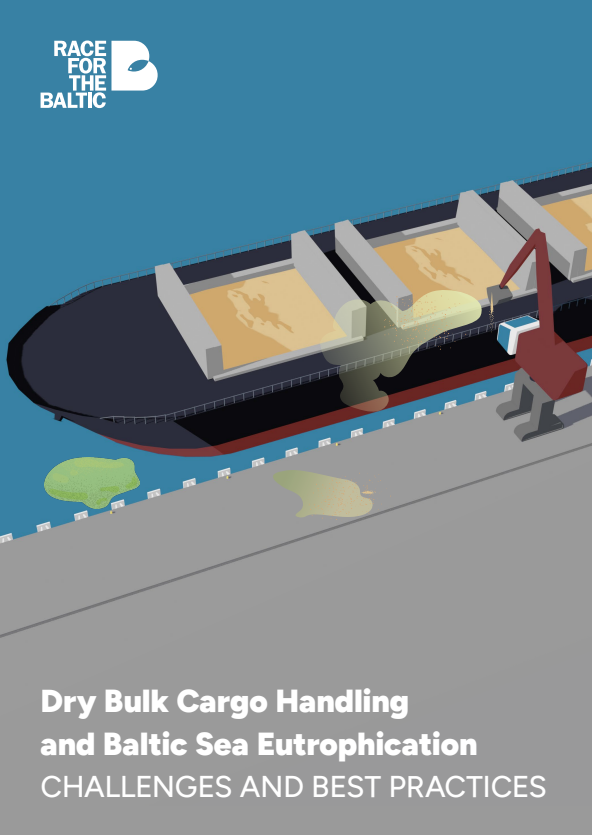
Alongside the hardware, our publication Dry Bulk Cargo Handling and Baltic Sea Eutrophication – Challenges and Best Practices took its final shape. It draws on a year of site visits and conversations with more than 40 experts from the port industry, together with a review of dozens of reports and studies. The result: over 80 best practices for safer, cleaner dry bulk handling – covering everything from dust prevention and stormwater management to grab crane procedures and quay cleaning – alongside technical details of the PortSHAZ prevention cover and a dedicated chapter explaining what eutrophication is and how bulk cargo handling contributes to it.
The official launch took place on 24th of June, on day two of Kongres Polskie Porty 2030, organised by GospodarkaMorska.pl. Małgorzata Żochowska, our Business Manager, presented the publication and spoke about the current state of the Baltic Sea and the concrete steps terminal operators can take to protect it. Around 200 printed copies went out to congress participants free of charge.
This isn't a trade-off between the environment and the bottom line. Cutting cargo loss into the marine environment also means cutting loss of product, time, and money for terminals – a genuine win-win, and a strong note to close out the quarter on.