
GYPREG: From promising trials to scalable water protection
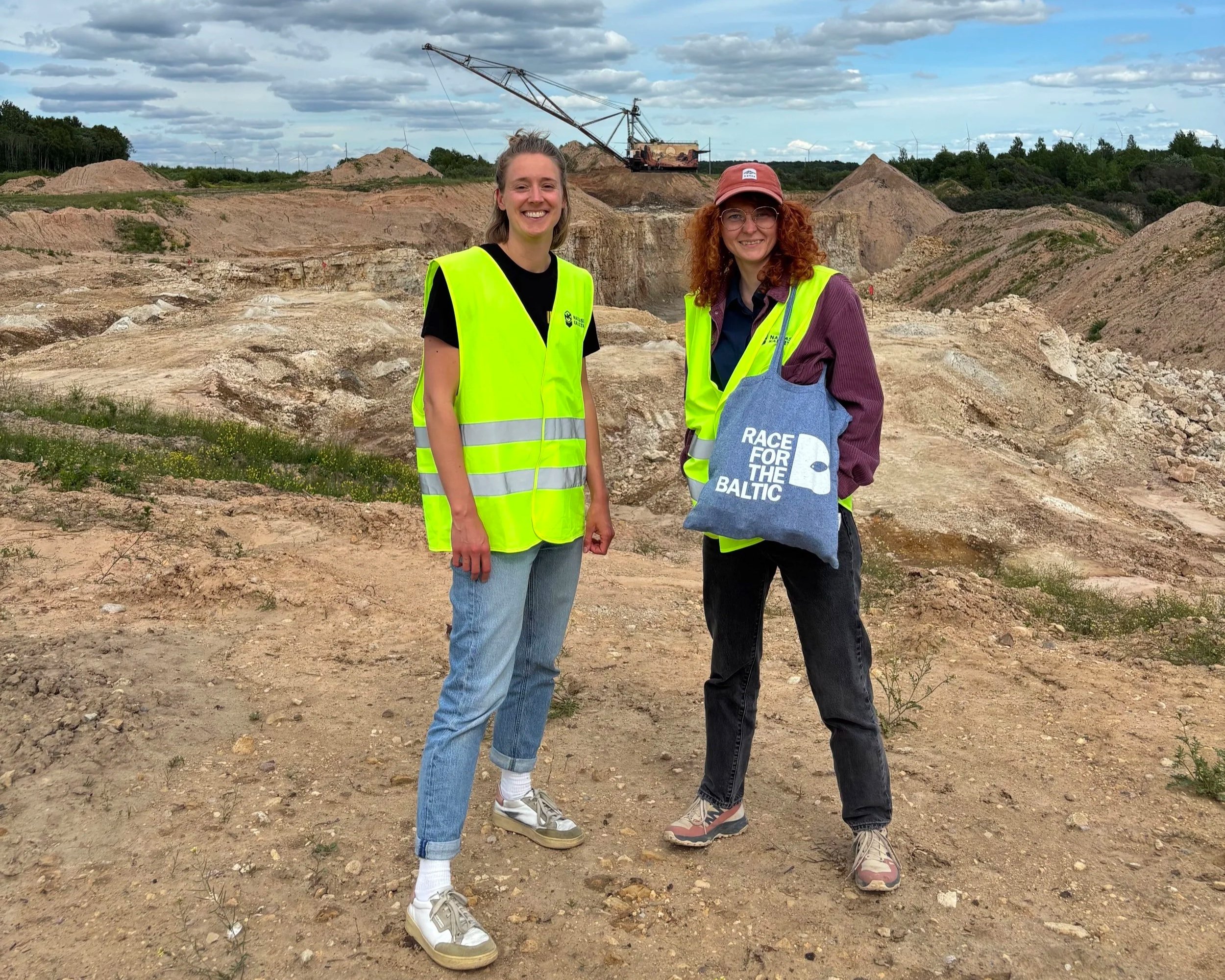
Elsa Bertils and Aleksandra Najda during a study visit at the GYPREG partnership meeting near Klaipeda, Lithuania.
As the EU Interreg–funded GYPREG project enters its final phase before closing in October, the second quarter of 2026 focused on bringing results together, sharing learnings and preparing new collaborations to scale gypsum treatment in Swedish and Polish agriculture.
In Sweden, results from the field and lab trials were compiled in April and shared through a webinar for agricultural advisors. Around 40 advisors joined to learn more about how gypsum can improve soil structure and reduce phosphorus runoff from farmland.
To build further evidence beyond the EU Interreg-funded project, we are also continuing parts of the Swedish field trials. With approved LOVA funding from Länsstyrelsen Kalmar, the Gamleby trial will continue in 2026 and 2027, allowing us to follow the effects two and three years after spreading. Complementary funding from the Swedish Board of Agriculture will also make it possible to monitor crop yield and plant nutrients.
Together with RISE, we presented GYPREG at Borgeby Fältdagar, Sweden’s largest agricultural fair, where farmers, advisors and other agricultural stakeholders showed strong interest in gypsum as a practical water protection measure.
In June, the GYPREG partnership gathered near Klaipeda, Lithuania, for project work, study visits and a public seminar on reducing agricultural phosphorus loads. Race For The Baltic led discussions on national operating models and policy recommendations, supporting the project’s final phase and future implementation across partner countries.
In Poland, we visited Yara’s site in Uusikaupunki, Finland, together with Grupa Azoty Police and the John Nurminen Foundation. Seeing the Finnish model in practice — from field application to long-term monitoring — reinforced one of the project’s key lessons: scaling gypsum treatment requires close cooperation between NGOs, industry, farmers and public authorities.
Building on this, we are now exploring a new collaboration with a major energy-sector player that produces gypsum as a byproduct. Together, we aim to assess how this material could support phosphorus reduction in Polish agriculture through a reliable supply chain, technical guidance and future farmer outreach.