
DRY BULK: Turning Knowledge into Impact
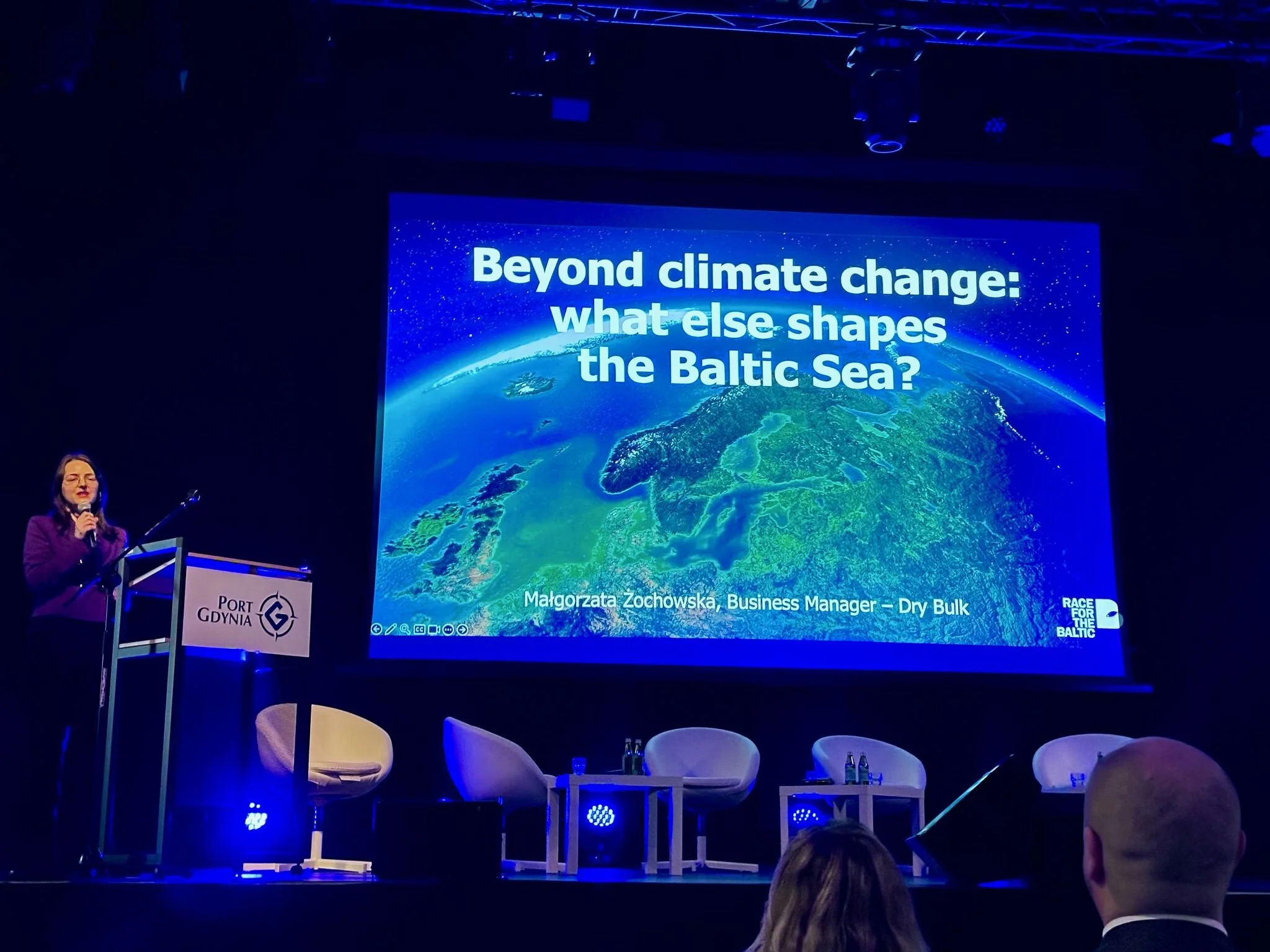
Dry Bulk Business Manager, Małgorzata Żochowska, presenting at the Port of Gdynia.
At Race For The Baltic, impact is at the core of work, and the last quarter was about turning knowledge and dialogue into concrete actions within our Dry Bulk project.
Alongside ongoing conferences, we took important steps toward delivering tangible, on-the-ground progress. We engaged with two new grain terminals in Poland, shortlisted three promising dry bulk solutions, and began preparations for their pilot phase. In parallel, work is nearing completion on a new publication on dry bulk handling. More details coming in the next newsletter!
To support this impact-driven work, Q4 activities also focused on two objectives:
• raising awareness of eutrophication as a critical pressure on the Baltic Sea, including in the context of port operations, and
• gathering expert input to strengthen our upcoming Dry Bulk publication.
Throughout October and November, Dry Bulk Business Manager, Małgorzata Żochowska, participated in a series of key conferences and expert forums. We were particularly pleased that many of these engagements took place along the Polish coast, where large volumes of grain, fertilisers, and other eutrophying goods are handled.
Between 6-8th of October, Małgorzata Żochowska represented RFTB at the annual Baltic Ports Organization Conference and BaltExpo Fair in Gdańsk. These events brought together port authorities, terminal operators, and technology providers from across the Baltic Sea region.
On 9th of October, Małgorzata took part in a scientific seminar organised within the Interreg LIMIT project in the Port of Gdynia. Her contribution focused on two of the most severe pressures affecting the Baltic Sea: hazardous substances and eutrophication, with particular attention to how port and shipping activities can exacerbate both. The seminar also included a site visit to a port wastewater pre-treatment facility, offering practical insights into how emissions from ships and cruise traffic can be managed more responsibly.
On 17th of October, Małgorzata joined the kick-off of the new John Nurminen Foundation project: CargoRes – Sustainable Handling of Cargo Residues, where Małgorzata shared insights from six years of RFTB’s work on dry bulk and cargo-related environmental risks.
Finally, on 20th of November, RFTB contributed to the Baltic Ports for Climate Conference, where Małgorzata spoke about why the environmental impact of port and shipping operations cannot be assessed through a carbon lens alone. Drawing on HELCOM’s HOLAS assessment, she highlighted eutrophication, hazardous substances, and seafloor loss as interconnected pressures – and underlined the role of improved dry bulk handling in delivering concrete, measurable benefits for the Baltic Sea.