
Phosphogypsum recycling speeds up
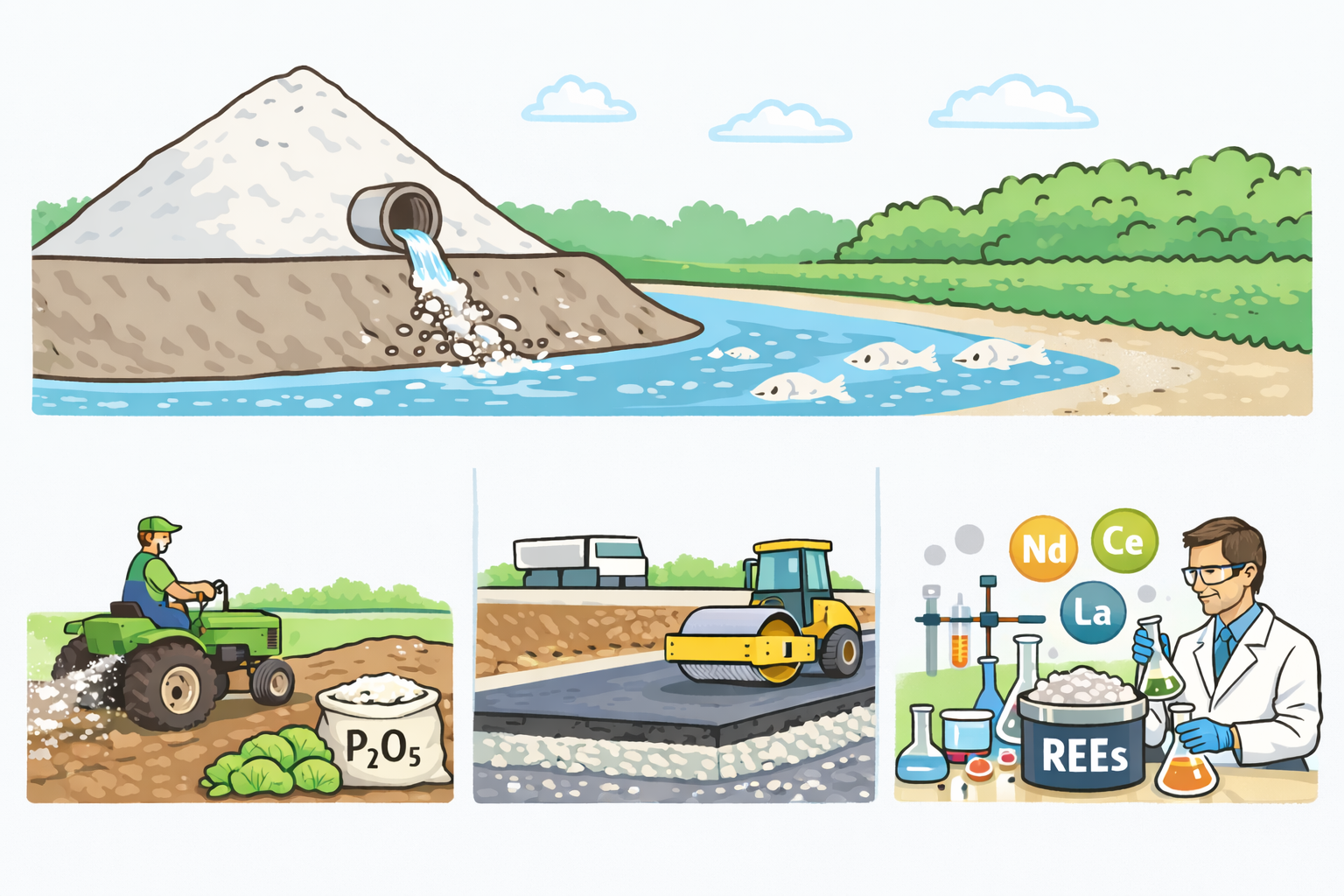
Phosphogypsum: waste to resource via soil, construction, and REE extraction.
RFTB works to identify new uses for phosphogypsum, a waste by-product generated during phosphoric acid production in fertilizer plants. Phosphogypsum typically contains around 1% phosphorus (expressed as P₂O₅). At present, it is often stored in large stacks, where phosphorus can leach into nearby water bodies.
There are several viable alternatives for recycling phosphogypsum instead of stockpiling it. We have been exploring three main recycling pathways:
• Use of phosphogypsum as a soil amendment, where it can substitute conventional gypsum, which is available from limited sources in Poland.
• Use of phosphogypsum in construction, especially in impermeable layers of road and railway embankments, where it can replace gravel-based materials.
• Extraction of Rare Earth Elements from phosphogypsum, an option that is receiving increasing attention due to rising demand and limited primary sources of REEs.
Overview
Phosphogypsum storage in proximity to water bodies creates significant environmental pressures. Phosphogypsum derived from sedimentary phosphate rock may contain elevated concentrations of heavy metals and naturally occurring radioactive materials (NORM). These contaminants can be mobilised in leachates, which, if properly managed, may be treated in wastewater treatment plants or redirected back to the production process.
Closed phosphogypsum stacks should be isolated from water inflow through appropriate recultivation measures and technical solutions that ensure the stored material remains dry. However, even actively managed phosphogypsum stacks equipped with the most advanced containment and monitoring systems inevitably exert a residual negative impact on the surrounding environment.
For this reason, closing the phosphogypsum loop by introducing new recycling pathways is essential for the fertilizer industry, both to reduce long-term environmental risks and to support circular economy objectives.
Key actions
During the fourth quarter of 2025, Race For The Baltic worked with its industrial and scientific partners to advance new phosphogypsum recycling pathways. In this effort, we cooperated with market-leading construction companies, gypsum producers, and research institutions to ensure that phosphogypsum recycling solutions are environmentally safe and economically viable for all business partners.